An AI cycling dashcam that detects the crash and calls for help when the rider can't

Introduction
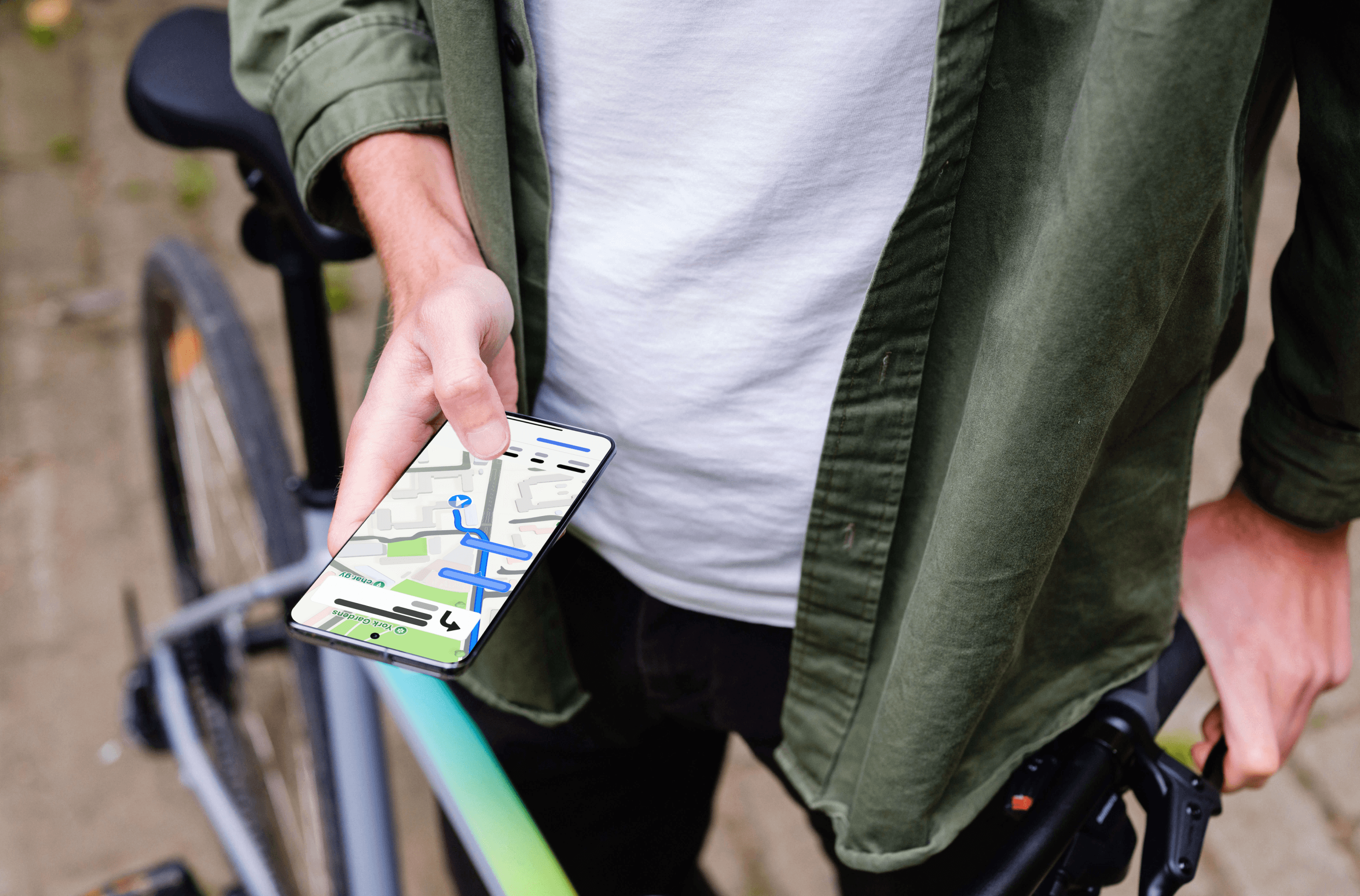
DashMap is an AI cycling safety app that turns a cyclist's existing smartphone into a dashcam, a navigation tool, and a safety companion. The idea rests on something cyclists already do: they mount their phone on the handlebars, mostly to navigate. DashMap builds on that behaviour rather than asking anyone to buy and carry another piece of hardware.
While the cyclist rides, DashMap navigates and continuously records the journey. If a crash happens, the AI detects the incident, preserves the footage that matters, alerts emergency services, and helps the rider deal with what comes afterwards.
I was responsible for design. I led the product design and design strategy across the whole experience — the research that shaped the product, the positioning and product narrative, and the interface across navigation, crash response, and post-accident support.
Where the idea came from
The product starts with a real crash. One of the founders cycled to campus every day and genuinely enjoyed it. One day he was hit by a taxi. He was injured, in pain, and had no idea what he was supposed to do next. No support arrived, and he ended up relying on the taxi driver to take him to hospital.
That experience exposed how little sits behind a cyclist when something goes wrong. Cars increasingly ship with dashcams, crash detection, automatic emergency calling, and an insurance infrastructure built around them. Cyclists have none of it.
The problem
Cyclists regularly experience dangerous situations on the road, and the safety data on London cycling backs that up. But the problem DashMap focuses on is narrower and sharper: what actually happens in the minutes and weeks after an incident.
We found three gaps. There is no guarantee anyone will help immediately after a crash. Injured cyclists often depend on a bystander — or on the other party in the accident — to call emergency services. And if nobody recorded what happened, the cyclist is left with little evidence when they later try to make an insurance claim or take legal action.
Behind all three is a simple truth about human behaviour. Immediately after an accident, a cyclist's priority is their injury, not collecting evidence, calling insurers, identifying witnesses, or working out the correct sequence of steps. The system has to act at the exact moment the person cannot.
Field research
Rather than lean on secondary research, I took the team into the field. We spent 12+ hours observing rider behaviour across 6 bike stations in London and interviewed 40+ cyclists on site. 90% expressed interest in additional safety features.
The single most useful observation had nothing to do with safety. Cyclists were already mounting their phones on their bikes, and already opening navigation before setting off. That reframed the entire product for us.
Designed around real rider behaviour
Most cyclists already mount and use their phone while riding, so DashMap adds safety to something they are already doing instead of requiring a new device or a new habit. This became the centre of the product strategy. We are not asking cyclists to adopt an entirely new behaviour — they already take out their phone, mount it, open navigation, and ride. DashMap makes that same ride recorded and protected.
How it works
The product follows the cyclist through the whole ride. Before and during the ride, the phone provides cycling navigation while functioning as a dashcam, recording continuously so the rider never has to decide in advance which moment is worth capturing.
When DashMap detects a crash, its AI evaluates the situation and determines which actions are appropriate: preserving the relevant footage, contacting emergency services, notifying someone close to the cyclist, or initiating other forms of assistance. The important distinction is that this is not a crash alarm. Multiple AI agents coordinate different actions depending on what has actually happened, and the response can escalate beyond AI to real human support.
Three promises
Immediate help. If a crash is detected, DashMap can alert emergency services without the cyclist needing to be able to make the call themselves.
Clear evidence. The ride is recorded and the relevant footage is preserved, so the rider has an account of what happened rather than a memory of it.
Dedicated support. DashMap helps the cyclist deal with the wider consequences of the accident, including medical coordination, insurance, and legal matters.
The third promise is where the differentiation lives. The goal is not to pretend DashMap replaces doctors, emergency services, lawyers, or insurers. It becomes the cyclist's representative and coordinator — communicating with responders, preserving evidence, gathering information from the scene, explaining what insurers will need, and handling practical tasks while the rider is dealing with their injury.
AI agents plus human support
Two layers sit behind those promises. AI agents assess what has happened and coordinate the appropriate actions, which might mean emergency communication, evidence management, notifying family, or insurance-related steps. Human support takes over when something cannot or should not be handled by AI alone — a trained support person steps in and coordinates the practical matters around the accident. This is the point where DashMap stops being another cycling app.
Competitive positioning
Google Maps and Strava help cyclists navigate, plan routes, and track rides — safety response is not their proposition. Apple crash detection and products like Life360 go further, detecting certain incidents and triggering emergency or safety actions. DashMap extends past the initial alert by combining navigation, dashcam, crash detection, emergency response, evidence, and human support in one place.
The positioning is deliberately simple: most existing products solve one part of the problem, and DashMap is designed to support the cyclist throughout the incident.
Shipped
DashMap is not a concept deck. The app is live on the App Store, with cycling navigation and dashcam recording in the hands of real cyclists, and their rides are what we are learning from now. The product also secured funding to keep building, and the AI crash response, cloud, and human support layers are what we are developing and validating next.
What's next
The next stretch is less about adding features and more about growing the rider base. That means reaching cyclists through cycling communities, universities, and social channels, and partnering with organisations that already have access to riders — bike sharing operators, cycling organisations, councils, road safety bodies, and insurers.
Alongside that, we keep putting DashMap into real rides and feeding what we learn back into navigation, crash detection, and the post-accident experience.
The idea holding the whole thing together is a small one. Cyclists already carry the hardware they need. DashMap turns that phone from something that shows them where to go into something that can also protect them when the ride goes wrong.